
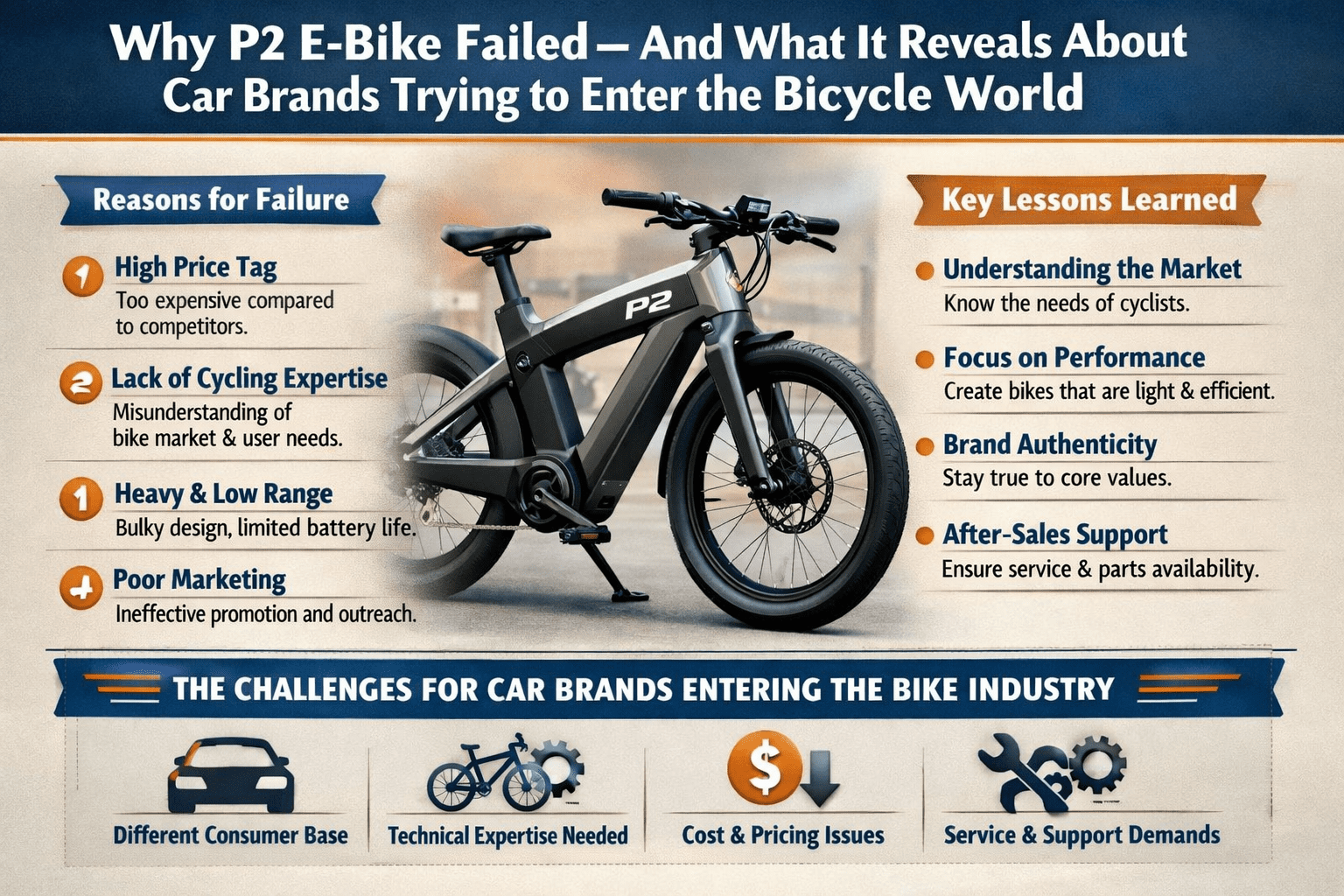
A behind-the-scenes look at a project that never truly took off
Published by Radical Life Studios / MTB Report
When Porsche and the Pon Group launched the P2 E-Bike GmbH in 2022, the vision sounded ambitious: a new premium e-bike platform built in Stuttgart, backed by the technical expertise of Greyp, Rotwild and Porsche eBike Performance. A fresh, high-end ecosystem was supposed to emerge — technologically advanced, beautifully integrated, unmistakably “Porsche” in character.
But today, one thing is clear:
P2 never managed to break through.
Not because the idea was weak,
but because it suffered from the same structural mistakes that have crippled almost every automotive attempt to enter the cycling world.
A project with no clear identity
P2 never operated as a standalone brand.
It was woven into a complex network of overlapping initiatives:
- Porsche eBike Performance (Fazua + motor development)
- Greyp (connectivity and battery tech, later shut down)
- Rotwild collaborations
- Porsche-branded OEM bikes developed outside P2 entirely
The result was a fragmented portfolio with no unified direction.
P2 wasn’t allowed to become its own brand; it became a placeholder inside a corporate structure that shifted too often and too broadly.
A brand without a clear product is not a brand — it’s a PowerPoint slide.
The market changed faster than anyone expected
While P2 was building its internal framework, the global e-bike market hit the brakes.
The pandemic boom ended abruptly:
- warehouses filled up
- consumer demand cooled
- price sensitivity increased
- competition intensified
Launching a high-priced premium product in a tightening market is difficult.
Launching it without a clear identity is almost impossible.
Big announcements, small product reality
P2 talked often about “the next generation of e-bikes.”
But the industry never saw meaningful product volume, real launches, or broad availability. The website remained sparse. Test bikes were rare. Dealers had little to work with.
In the cycling world, visibility isn’t a nice-to-have — it’s survival.
Greyp: A missing pillar
Greyp, originally purchased for its technological edge, was discontinued by Porsche in 2023.
Not profitable.
Not scalable.
Not strategically aligned.
With Greyp gone, a major part of P2’s technical foundation vanished.
More energy went into restructuring than into building bikes.
Automotive companies consistently underestimate the bicycle industry.
They treat bikes as lifestyle accessories, brand extensions, design objects.
But real mountain bikes — especially e-MTBs — demand deep, hands-on engineering, long development cycles, and an understanding of riding culture that can’t be outsourced.
Most car brands try the shortcut:
- outsource frames
- license tech
- assemble through partners
- badge the result with a premium logo
The outcome is predictable:
- technically interesting but immature bikes
- extremely high prices
- weak service infrastructure
- little trust from the MTB community
A Porsche logo does not replace years of MTB engineering.
A premium brand identity does not magically produce a premium bike.
The market has punished these attempts before —
and P2 is simply the latest example.
If you want to build bikes,
you have to build bikes.
Not concepts. Not collaborations.
Real bikes, developed by real bike engineers,
for riders who know exactly what works and what breaks on the trail.
P2 didn’t fail spectacularly —
it quietly faded because it never truly started.
It is a clear reminder of how difficult it is for non-bike companies to treat the cycling sector as a design playground or a marketing showcase.
Mountain biking does not reward branding.
It rewards performance.
Durability.
Reliability.
Engineering that understands the punishment of real trails.
The community knows the difference
between a bike made for riders
and a bike made for slideshows.
- Paganella Part 1: The New TOP GUN Trail & Why I Skipped Lake Garda | #MTBlife S04E13

- The Million-Dollar Trail Town – and the Ban That Nearly Killed the Model
- MTBlife S04E09 | 3-Länder Enduro Trails Nauders – Ein Tag, drei Länder, ehrliche Trails
- The Derailleur Is Dying. The Wattage War Isn’t. Avinox MG vs. Gobao – Inside the Gearbox Fight
- Zugspitzpark Ehrwald – The Complete Guide for Your Visit
- Tiroler Zugspitz Arena MTB Geheimtipp am Fuß der Zugspitze – Biberwier & Lermoos #MTBlife
- Größter Indoor-Bikepark der Welt – die unglaubliche Geschichte von Ray Petro
- #MTBlife S04E04 — Bikepark Albstadt: Small, Honest, Weatherproof
- Atemberaubende FPV-Drohnenaufnahme zeigt Red Bull Hardline aus völlig neuer Perspektive
- Blindsee Trail: Why the “Closure” Isn’t One — and Where the Fix Already Exists
- While the rest of us argue about access, Austria just built a 10km flow trail
- A World-Class Alpine Trail Is Being Killed Off – And the Reason Should Worry Every Rider


No responses yet